So you’ve decided weight loss surgery might be the right move. Good for you, seriously. That’s a big, brave decision and not one most people arrive at lightly.
But then you start researching, and suddenly there are approximately 47 different procedures with names that sound like they belong in a sci-fi movie. Gastric sleeve surgery. Mini gastric bypass surgery. RNY bypass. One anastomosis gastric bypass. SADI-S. What even is a SADI-S?
Today, we’re keeping it simple and focusing on two of the popular options: the mini gastric bypass (<- that is the one I had) vs the gastric sleeve. I’ll try my best to explain what each one actually does, who tends to do better with which, and what the real differences are.
First, Let's Talk About What These Surgeries Actually Do
Both procedures are about helping you eat less and lose weight. But they do it in slightly different ways, and that difference matters more than you’d think.
Think of it like this. The gastric sleeve is the “less is more” approach. The mini gastric bypass is the “let’s really go for it” approach. Both are done laparoscopically (meaning through small incisions, not a huge cut), both are performed under general anesthesia, and both permanently change how your digestive system works.
What Is the Gastric Sleeve?

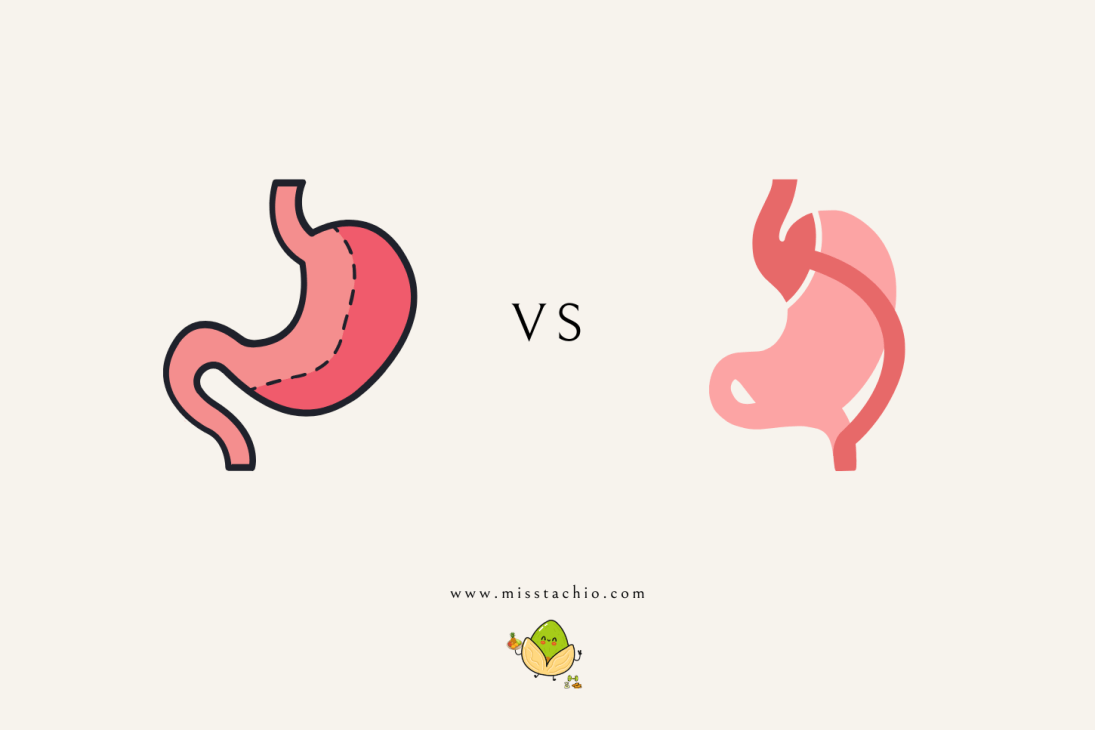
The gastric sleeve, also called sleeve gastrectomy, removes about 75 to 80 percent of your stomach. What’s left behind is a narrow, tube-shaped stomach, roughly the size of a banana.
So basically, your stomach goes from the size of a football to something closer to a hot dog. A small hot dog.
Because your stomach is so much smaller, you get full incredibly fast. You simply can’t eat as much as you used to. And here’s the bonus: the part of the stomach they remove is the part that produces ghrelin, the hunger hormone. So not only can you eat less, you also don’t feel as hungry all the time. That part honestly sounds like a miracle to anyone who has spent years fighting constant cravings.
The gastric sleeve is a purely restrictive procedure. Your digestion works exactly the same as before, just with a much smaller stomach. Nutrients absorb usually normally, food moves through your body normally. Less goes in, more weight comes off.
Most patients lose around 60 to 70 percent of their excess body weight in the first 12 to 18 months. So if you’re 100 pounds over your goal weight, you’re looking at losing roughly 60 to 70 of those pounds in the first year and a half.
Who Does Best With the Gastric Sleeve?
The sleeve tends to be recommended for people who have a body mass index (BMI) in the 35 to 45 range, want a simpler procedure with fewer long-term nutritional requirements, and don’t have major obesity-related conditions like uncontrolled type 2 diabetes driving the decision.
It’s also a good option if you’re concerned about vitamin deficiencies down the road, since the sleeve doesn’t affect how your body absorbs nutrients. Your supplement routine post-op is simpler compared to bypass procedures.
One thing worth knowing: some people find that acid reflux gets worse after the sleeve. If you already struggle with heartburn, that’s something to bring up with your bariatric surgeon before deciding. I remember this was something my surgeon actually asked during the initial consultation when we were weighing different types of operations.
What Is the Mini Gastric Bypass?

The mini gastric bypass, also called the one anastomosis gastric bypass (OAGB) or single anastomosis gastric bypass, is a newer take on the classic gastric bypass surgery. It was designed to get similar results with a shorter, simpler operation.
Here’s what happens. The surgeon creates a small stomach pouch at the top of your stomach, then connects it directly to a loop of the small intestine, skipping about 150 to 200 centimeters of your upper gut.
This is where the big difference from the sleeve comes in. The mini bypass works in two ways at once. First, your stomach is smaller, so you eat less. Second, because part of your small intestine is bypassed, your body absorbs fewer calories from what you do eat. Double restriction. That’s why weight loss tends to be more dramatic with the mini bypass.
The traditional RNY gastric bypass does something similar but creates two connections in the intestine instead of one. The mini bypass does it with just one connection (that’s the “single anastomosis” part of the name), which makes the operation quicker and slightly less complex than the traditional bypass while still delivering comparable results.
Who Does Best With the Mini Gastric Bypass?
The mini bypass tends to be the stronger option for people with a BMI above 45, those with significant obesity-related conditions (especially type 2 diabetes), or people who have already had a sleeve and are considering a revision because they didn’t get the results they hoped for.
It’s also worth considering if diabetes remission is a major goal for you, because the hormonal changes from the intestinal bypass are powerful, often sending diabetes into remission even before significant weight loss happens.
The trade-off is that the nutritional requirements are more demanding afterwards (trust me on that). You’ll need consistent blood work and lifelong vitamin supplementation, and the potential for bile reflux is something your surgeon will factor into whether the mini bypass is right for your anatomy.
Mini Gastric Bypass vs Gastric Sleeve: The Real Differences
Okay, let’s get into the actual comparison. This is the part you probably came here for.
Weight Loss Results
The gastric sleeve delivers solid, sustained weight loss, typically 60 to 70 percent of excess body weight. The mini gastric bypass regularly hits 70 to 90 percent.
If you have a lot of weight to lose, the mini bypass has the edge. If you’re closer to the lower end of the spectrum, the sleeve gets you where you need to go without the added complexity.
Diabetes Remission
This is where the mini bypass really pulls ahead. Because of the intestinal rerouting, patients experience hormonal shifts that go well beyond just eating less. Diabetes remission rates following the mini gastric bypass are documented at 80 to 90 percent in some studies. The sleeve delivers around 60 to 70 percent remission.
Both numbers are extraordinary compared to medication alone. But if managing or eliminating type 2 diabetes is a big part of why you’re considering surgery, the mini bypass is worth a serious conversation with your surgeon.
Surgery Complexity and Recovery Time
The sleeve is the simpler operation. One step, shorter time in the operating room, no intestinal rerouting.
The mini bypass is more involved but still far less complex than the traditional RNY gastric bypass. Both are minimally invasive, and recovery timelines are similar, around 2 to 6 weeks before returning to most daily activities, with mini bypass patients needing slightly closer monitoring in the early weeks.
Nutritional Needs After Surgery
After a gastric sleeve, your supplement routine is relatively straightforward: usually a bariatric multivitamin, calcium, and B12. Your body still absorbs everything the same way.
After a mini gastric bypass, the bypassed section of small intestine means your body absorbs less of certain vitamins and minerals. Iron, calcium, fat-soluble vitamins, and B12 all need more careful monitoring. You’ll have regular blood work, and supplementation needs to be consistent and specific.
This isn’t a dealbreaker, but it is a real, lifelong commitment. Some people find it manageable. Others find it a bit overwhelming, and that’s worth factoring into your decision.
Acid Reflux vs Bile Reflux
The sleeve can worsen acid reflux in some patients, because changing the shape of the stomach affects the valve between your stomach and esophagus.
The mini bypass, by contrast, can cause bile reflux in some cases. Bile from the bypassed loop of intestine can travel back into the stomach pouch, which is as unpleasant as it sounds.
Neither surgery is a guaranteed problem in this department, but if you currently have significant reflux issues, this is a conversation you need to have honestly with your bariatric surgeon before making any decision.
Can You Reverse It?
The gastric sleeve is permanent. That portion of your stomach is gone, and it’s not coming back. The mini gastric bypass can technically be revised or reversed, though any revision surgery is more complex than the original.
Neither procedure should be treated as reversible in any practical sense. These are permanent, life-altering changes, and that’s exactly how you should approach the decision.
So, How Do You Actually Choose?

Here’s the honest answer: your bariatric surgeon/team is going to help make this call based on your full medical history, your current BMI, your obesity-related conditions, and your long-term goals.
But knowing what questions to ask before that appointment makes a huge difference.
Ask about your acid reflux history and which procedure is safer for your stomach anatomy. Ask about your diabetes status and whether remission rates should influence your choice. Ask about the nutritional monitoring protocols for each surgery and whether you’re realistically prepared for that commitment.
And ask yourself this: which one can you truly commit to for the rest of your life? Because both procedures require permanent lifestyle changes after surgery. The surgery is the beginning, not the finish line.
The Bottom Line
The mini gastric bypass and the gastric sleeve are both genuinely good weight loss surgeries. Neither is objectively “better.” The right one depends on your body, your health conditions and overall health, your weight loss goals, and your willingness to commit to the aftercare each procedure requires.
What they have in common is this: they both work best for people who go in with realistic expectations, solid support, and a commitment to doing the work after surgery. The procedure gets you started. Everything else is up to you.
And honestly? I’m curious where you’re at with all of this. Are you still in the researching-everything-at-3am phase, or have you already had your consultation and you’re trying to make the final call? Maybe you’ve already had one of these surgeries and you’re reading this going “yep, that checks out” or “wait, nobody told me THAT.”
Either way, drop it in the comments.
Questions People Actually Ask About Mini Gastric Bypass vs Gastric Sleeve
Is the mini gastric bypass safer than the gastric sleeve?
Both procedures are considered safe when performed by an experienced bariatric surgeon. The sleeve is slightly simpler with a smaller risk profile. The mini bypass carries additional considerations around bile reflux and nutritional absorption. Which one is safer for you specifically depends entirely on your individual health history and anatomy. There’s no universal answer here, which is why a proper surgical consultation is non-negotiable.
Which surgery causes more weight loss?
The mini gastric bypass consistently produces greater excess weight loss, particularly in the 12 to 36 month window after surgery. The sleeve is effective but can see more weight regain over time in some patients. Long-term results for both depend heavily on lifestyle habits, food choices, and how closely you follow up with your care team.
Can a gastric sleeve be converted to a mini gastric bypass?
Yes, and it’s one of the more common revision pathways. If you had a sleeve and didn’t get the results you hoped for, or if you’ve regained weight after initial success, your surgeon may recommend converting to a mini bypass. Adding the malabsorptive component on top of the restriction you already have can produce meaningful additional weight loss.
Does the mini gastric bypass cure type 2 diabetes?
“Cure” is a word surgeons are careful with, and rightfully so. What the research shows is that diabetes remission happens in 80 to 90 percent of mini bypass patients, often within weeks of surgery before major weight loss has occurred. This is believed to happen because of hormonal and metabolic changes triggered by the intestinal bypass, not just from eating less. The sleeve produces remission in around 60 to 70 percent of patients, which is still remarkable compared to medication management alone.
How long is the recovery from each bariatric surgery?
Both procedures are laparoscopic, so recovery is much faster than open surgery. Most patients are up and walking the day of or the day after surgery, and are discharged within 1 to 3 days. Returning to desk work happens around 2 to 3 weeks for most people. Physical jobs or exercise take 4 to 6 weeks. Mini bypass patients tend to need a bit more careful monitoring early on. Full internal healing takes roughly 3 months for both.
What about dumping syndrome?
Dumping syndrome is more associated with bypass procedures than with the sleeve. It happens when food moves too quickly from the stomach pouch into the small intestine, causing symptoms like nausea, sweating, dizziness, and an urgent need to lie down. It sounds awful, and it is. But for many gastric bypass patients, it actually helps reinforce better food choices, because eating high-sugar or high-fat foods becomes an experience you really don’t want to repeat. Silver linings.
Can bariatric procedures help with sleep apnea?
Yes, and for many gastric patients, this is one of the most life-changing benefits of surgery. Obstructive sleep apnea is strongly linked to excess weight, especially around the neck and upper airway. When significant weight loss happens after a surgical procedure like the mini gastric bypass or the mini gastric sleeve, that pressure on the airway decreases. As a result, many patients see major improvement in their sleep apnea symptoms, and some are able to reduce or even eliminate their CPAP use under medical supervision.
It’s not guaranteed, and it doesn’t happen overnight. But for people early in their weight loss journey who are exhausted from poor sleep, headaches, and constant fatigue, the improvement in breathing can feel just as powerful as the number on the scale dropping. If sleep apnea is part of your health picture, make sure it’s part of the conversation with your surgical team. It can absolutely factor into which procedure makes the most sense for you.
Is the mini gastric bypass a major surgery?
Both the mini bypass and the sleeve are considered minimally invasive procedures, which sounds almost too casual for something that permanently changes your digestive system. But compared to older open bariatric operations, the laparoscopic approach means smaller incisions, less time in the operating room, and faster recovery. That said, any surgery involving gastric resection and rerouting of the small bowel carries real risks, and obese patients or those dealing with severe obesity should have a thorough pre-surgery evaluation to understand what those risks look like for them specifically.
Will I gain weight back after bariatric surgery?
This is the question many patients are almost afraid to ask out loud, and that’s something I’ve been wondering a lot, too. The short answer: it’s possible, and it’s more common than the before-and-after photos on the internet suggest. Long term weight loss depends heavily on food consumption habits (like your food intake), lifestyle changes, and long term monitoring with your surgical team. The mini bypass tends to have a stronger malabsorptive effect that supports more durable results, but neither surgery is a permanent shield against weight regain if old habits creep back in. Many patients find that having a solid support system and staying connected to their care team makes the biggest difference years down the line.