Quick Takeaways
Straws cause you to swallow excess air, which leads to uncomfortable bloating and discomfort in a stomach that’s already tiny
Your post-op stomach holds around 60–90ml, meaning there’s genuinely no room for trapped air
That extra air creates unnecessary pressure on a healing staple line, especially in the early weeks
Straws also encourage drinking too fast, making it harder to take controlled sips like you’re supposed to
It’s not necessarily a permanent rule, many surgeons say it’s fine once you’re healed, as long as it doesn’t cause discomfort
You’ve just had weight loss surgery. You’re sipping water like it’s rationed, managing tiny portions, and trying to remember approximately one million new rules. And then someone says: no straws.
Not even straws.
A straw feels so harmless. It’s not a carbonated drink, it’s not a burger, it’s a little plastic or paper tube. What is it going to do?
Quite a bit, actually. At least in the early stages. But the full picture is more interesting than most post-op leaflets make it sound, and I’ll share what my own surgeon told me when I asked him about it directly. If you want context on what those first weeks actually feel like day-to-day, I wrote about what the first week after bariatric surgery is really like — it might help frame things.
First, a quick reminder of what gastric sleeve does to your stomach size
After gastric sleeve surgery, roughly 75–80% of your stomach is removed, leaving a narrow, banana-shaped pouch. Right after the operation, that pouch holds somewhere around 60–90ml, basically a shot glass or two. It does relax slightly as post-op swelling settles, but it stays dramatically smaller than before. That’s the whole point.
When your stomach size is that reduced, everything that goes into it competes for space. Food, liquids, air, and it all counts. And in those first weeks, your staple line (the surgical seam running along your new stomach) is still healing. It’s not fragile exactly, but it doesn’t need unnecessary pressure either. This is why so many of the dietary changes you’re told to make: small sips, no gulping, avoiding carbonated beverages, all trace back to the same logic: protect the pouch while it heals.
So why can't you use straws after gastric sleeve?
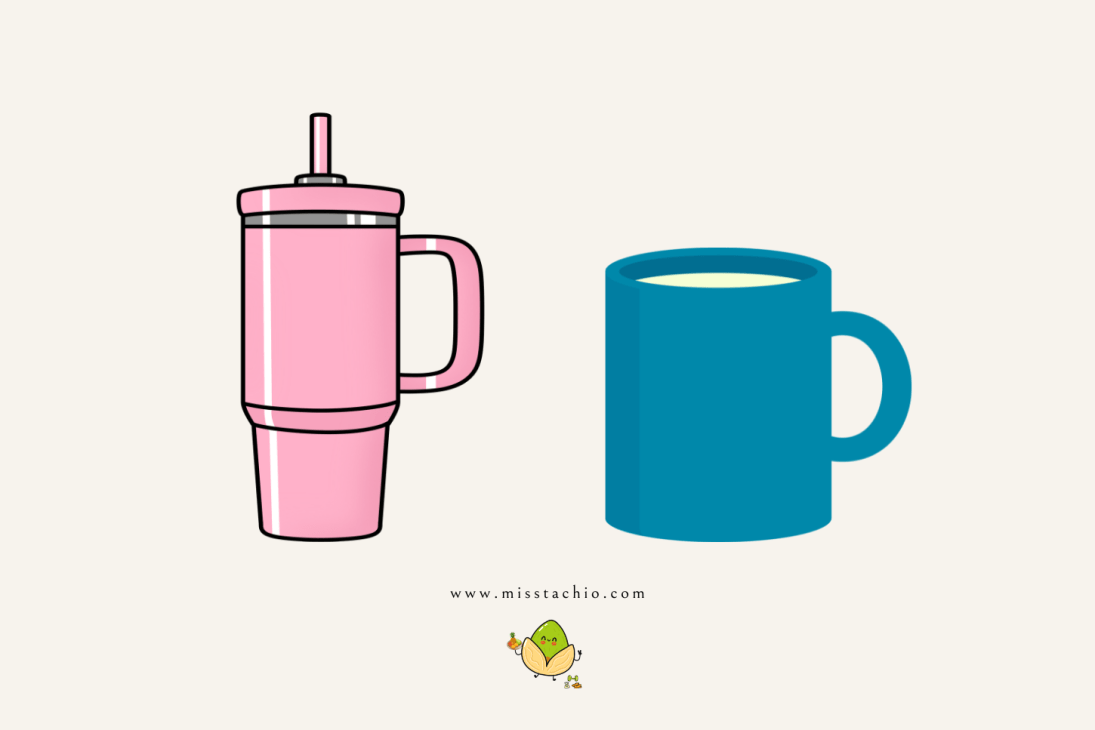
When you drink through a straw, you’re not only pulling liquid, you’re pulling air too. There’s always a small column of air in the tube before the liquid reaches you, and most people swallow some of it without realising. With a normal stomach, that’s nothing, maybe a burp, maybe even a loud one. With a post-op stomach the size of a banana, that extra air takes up actual space.
Clinical guidance consistently points to this as the main reason to avoid straws: swallowing excess air causes uncomfortable bloating, discomfort, and a sensation of premature fullness, which is a real problem when you’re already struggling to get enough fluids in. Staying hydrated is one of the harder parts of those early recovery weeks, and anything that makes you feel full before you’ve drunk enough works against you.
Beyond the discomfort, there’s the pressure side of things. Trapped air in a healing stomach pouch creates internal pressure on the staple line, and during the first weeks that staple line is still knitting itself back together. One straw sip isn’t going to cause a disaster, but your healthcare team will generally want to eliminate avoidable sources of strain during recovery where possible.
There’s also a speed issue that doesn’t get talked about enough. Taking controlled sips from a cup naturally slows you down. A straw pulls faster, which means more air entering your digestive tract, more pressure, and a much higher chance of nausea or that sudden too-full feeling that arrives before you even see it coming.
Is the no-straw rule a bariatric surgery myth, or is there real logic behind it?
This is where it gets interesting. The honest answer is that the evidence base is thinner than you’d expect. Some bariatric surgeons have pointed out that there’s limited objective research proving straws cause serious harm after weight loss surgery, and that how much air you actually swallow has more to do with your individual drinking style than whether a straw is involved. Someone who drinks slowly and carefully might swallow barely any air through a straw. Someone who gulps will swallow plenty without one.
Some programs do consider the no-straw restriction more of a persistent habit than a hard clinical rule, particularly for people further out from surgery — more of a bariatric surgery myth than a firm necessity, depending on who you ask.
I asked my own surgeon about it, tho worth noting that I had a mini bypass rather than a gastric sleeve, but his reasoning applies to both imo: it’s about the air, not the specific procedure. He said that straws tend to make people swallow more air than usual, and that extra air is what causes the discomfort, but if using a straw doesn’t cause you discomfort, it’s fine. That felt like a much more useful answer than a blanket ban. The rule exists because of what typically happens, not because a straw is inherently dangerous to a healing stomach. But of course, it is always better to double-check with your medical team.
It’s also worth knowing that how much any of this affects you can depend on which surgery you had: gastric sleeve, gastric bypass, and mini bypass all change your digestion somewhat differently. I wrote about how gastric sleeve compares to mini bypass if you’re curious about the differences in terms of what you can tolerate.
What should you drink from instead?
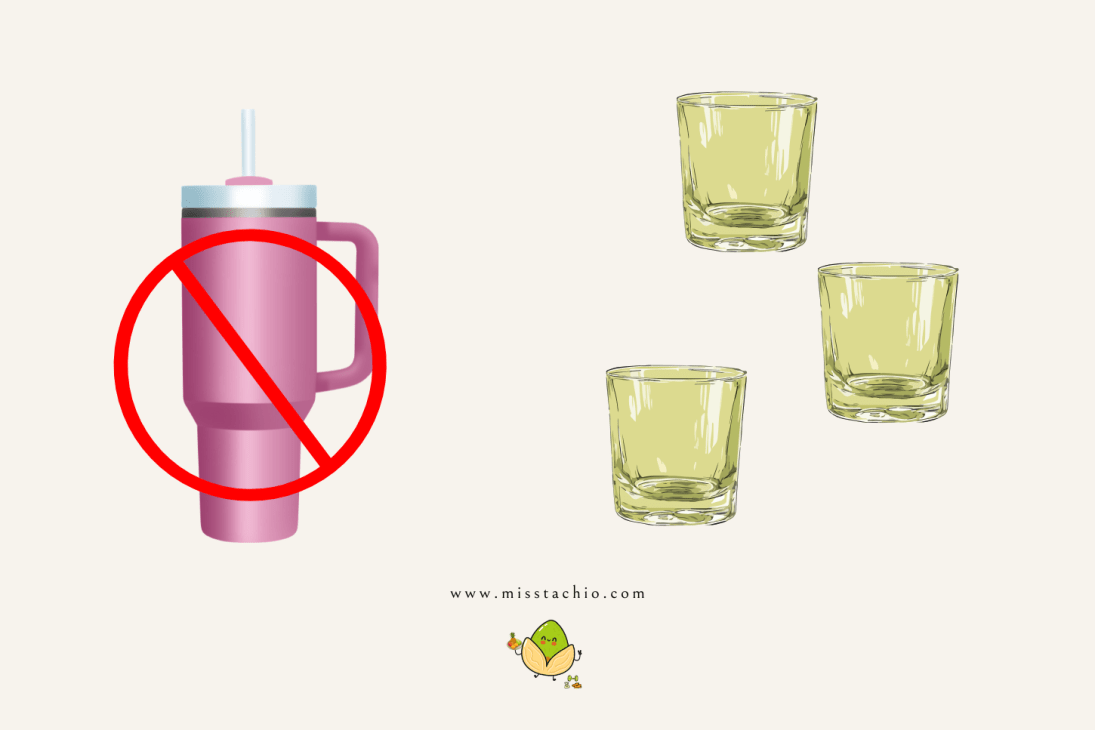
Small cups, mainly. The smaller the better. Shot glasses, espresso cups, little tumblers, anything that naturally limits how much you take at once and gives you a pause between controlled sips. Some people use sippy cups in the early weeks, which sounds a bit ridiculous until you’re actually in it and realise how much easier they make the constant hydration juggle.
I had to make peace fairly quickly with the fact that gulping was gone. I used to drink sparkling water in big satisfying gulps without thinking about it. Carbonated drinks of any kind were off the table for a while, and tbh, straw or no straw, they’d have caused the same uncomfortable bloating regardless. What I found worked was letting mineral water sit in the glass for a minute before drinking, until most of the bubbles had settled. It meant I had something that wasn’t plain still water without the discomfort. Small thing, but it helped.
Protein shakes can be trickier because they’re thick and some people genuinely find a straw easier for getting them down. If that’s you, go slowly, pause regularly, and pay attention to how your stomach responds. Meeting your protein and nutritional needs early in recovery matters a lot, so if a straw helps you actually get the protein shake in, that conversation is worth having with your healthcare team.
When can you reintroduce straws after gastric sleeve?
It varies a lot by surgeon and by how your own recovery goes. Some programs keep the restriction in place indefinitely. Others lift it once the staple line has healed, usually around the 6–8 week mark. Many surgeons, like mine, take a more practical approach: try it when you feel ready, stop if it causes discomfort.
Patient experiences genuinely vary: some people reintroduce straws quite early on without any issues, others find that even months out it still causes bloating or reflux. Your body is the most reliable guide here. If you try it and feel uncomfortable, that’s your answer for now. If nothing happens, you’re probably fine.
Gastric surgery is a powerful tool for significant weight loss, but the long-term success of it really does come down to the small habits (proper nutrition, workout habits, etc.) and how you drink is one of them. The no-straw rule makes sense as a precaution during those first weeks of healing. It’s not a lifelong commitment to straw-free living. Once you’re further along in recovery, it’s worth checking in with your own medical team about when it’s reasonable to revisit.
Have you tried using straws again since your surgery? Did it cause any issues, or were you completely fine? I’d love to know in the comments.